16 Best Insurance Lead Generation Ideas to Get More Clients in 2026
Insurance lead generation is the process of attracting prospects interested in buying insurance policies and converting them into paying clients. Insurance agencies use digital marketing, referrals, paid advertising, and networking to fill their sales pipelines with qualified leads.
Insurance lead generation helps agents attract high-quality prospects, build trust, reduce sales cycles, and grow their business steadily. The types of insurance for lead generation are home insurance lead generation, life insurance lead generation, health insurance lead generation, and auto insurance lead generation.
The strategies to generate insurance leads include using lead generation platforms, optimizing SEO and content marketing, investing in paid advertising and PPC campaigns, creating lead magnets, offers, and gated content, and integrating AI chatbots and live chats.
These strategies allow insurance agents to reach the right audience and increase conversion rates.
The 16 best insurance lead generation ideas to get more clients in 2026 are listed below.
- Use lead generation platforms: Utilize specialized insurance lead generation platforms like QuoteWizard and EngageBay that connect agents with pre‑qualified prospects looking for coverage.
- Optimize SEO and content marketing: Improve your website and online content to rank higher in search engine results, which helps attract visitors actively looking for insurance.
- Invest in paid advertising and PPC (Pay-Per-Click) campaigns: Use targeted online advertisements on platforms like Google, Facebook, or LinkedIn to reach potential insurance customers quickly.
- Create lead magnets, offers, and gated content: Develop valuable resources, like eBooks, guides, checklists, or special insurance quotes, that prospects can access in exchange for their contact information.
- Integrate AI chatbots and live chats: Integrate automated or real-time messaging tools on your website to engage visitors instantly, answer questions, and guide them toward requesting quotes or providing contact information.
- Run email marketing campaigns: Send targeted and automated emails to prospects and existing clients to nurture relationships, provide relevant insurance information, and follow up on quotes, which helps convert leads into policyholders.
- Use LinkedIn prospecting: Use LinkedIn to identify, connect with, and engage potential insurance clients or business partners. Agents are able to generate qualified leads and build professional relationships by sharing valuable content and reaching out directly.
- Manage lead nurturing funnels: Guide prospects through a structured journey, from initial contact to becoming a client. Use personalized communication, follow-ups, and targeted content to build trust and increase the possibility of converting insurance leads.
- Perform social media marketing and social selling: Utilize Facebook, LinkedIn, and Instagram to share useful content, connect with prospects, and build relationships that invite them to ask about or buy insurance, which generates qualified leads.
- Build partnerships, affiliates, and referral networks: Collaborate with other businesses, agents, or satisfied clients to generate warm insurance leads through recommendations and shared marketing efforts.
- Host events, seminars, and workshops: Organize in-person or online sessions to educate prospects about insurance options, answer their questions, and build trust, which helps capture qualified leads.
- Launch direct mail and print campaigns: Send targeted physical mail, like postcards, brochures, or flyers, to prospects to inform them about insurance products. These physical mails generate interest and capture leads through CTAs or contact requests.
- Conduct cold calling and telemarketing: Reach out directly to potential insurance clients by phone to introduce products, answer questions, and generate leads.
- Design local advertising and offline media: Create targeted advertisements in newspapers, magazines, radio, billboards, or community spaces to reach local prospects. These advertisements raise awareness about insurance products and generate leads from local potential clients.
- Provide educational content: Create informative resources, like blogs, guides, videos, or webinars, that help prospects understand insurance products and make informed decisions.
- Include a CTA on every landing page: Add a clear CTA (Call-to-Action) to convince visitors to take the next step, which helps capture insurance leads effectively.
1. Use lead generation platforms
Lead generation platforms connect insurance agents with prospects who are actively searching for coverage. These lead generation platforms collect contact information from consumers requesting quotes and sell those leads to agents in specific regions.
The top insurance lead generation platforms include QuoteWizard, EngageBay, and SmartFinancial. QuoteWizard provides real-time leads across multiple insurance verticals. EngageBay is a comprehensive marketing, sales, and service automation platform that includes CRM and email marketing tools to help businesses generate and nurture leads. SmartFinancial specializes in connecting consumers with insurance agents through a data-driven lead generation platform to focus on high-intent and accurately targeted insurance leads.
B2B data providers like BookYourData offer verified contact lists for commercial insurance prospecting. BookYourData provides access to over 500M business profiles across more than 200 countries with a 97% accuracy guarantee. Insurance agents use these email lists and databases to target business owners, CFOs, and HR directors, who make insurance purchasing decisions.
2. Optimize SEO and content marketing
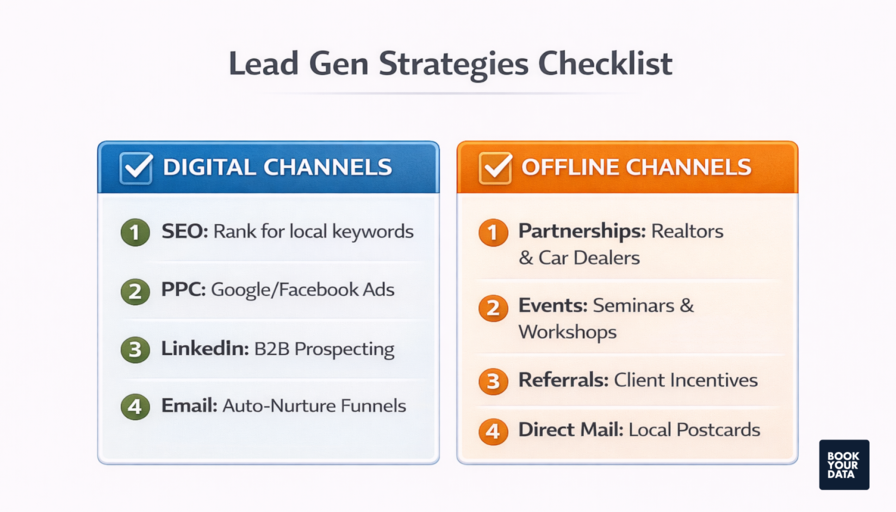
SEO (Search Engine Optimization) helps insurance agencies attract high-intent shoppers by ranking at the top of Google’s organic search results and allows them to generate leads online. Agencies that invest in SEO and digital marketing achieve long-term growth because they reach prospects already searching for coverage. These businesses attract consistent organic leads through form submissions and inbound requests by ranking on Google’s first page for high-intent queries
Content marketing supports this strategy by publishing helpful blog posts, comparison guides, FAQs, and educational resources that match consumers' searches online. Each piece targets specific keywords, such as “best auto insurance,” “health insurance plans,” or “home insurance coverage,” and includes clear calls-to-action linking to quote or consultation pages.
Successful insurance agents focus their content on the four main insurance categories, which include life, health, auto, and home. These articles explain policy options, compare plans, and focus on common customer concerns, which helps to build the business’s authority and generate inbound leads without paid advertisement.
3. Invest in paid advertising and PPC campaigns
PPC (Pay-Per-Click) advertising places insurance advertisements at the top of search engine results pages. Google Ads and Microsoft Ads allow agents to bid on keywords like “car insurance quote” or “term life insurance rates.”
Google Local Services advertisements show above all other results and charge per lead instead of per click, and also show agent ratings, reviews, and a Google Guaranteed badge. Agents only pay when a prospect calls or messages directly through the advertisement.
Facebook and Instagram advertisements target users based on demographics, interests, and behaviors. Insurance agencies use these platforms for retargeting website visitors who did not complete quote requests.
4. Create lead magnets, offers, and gated content
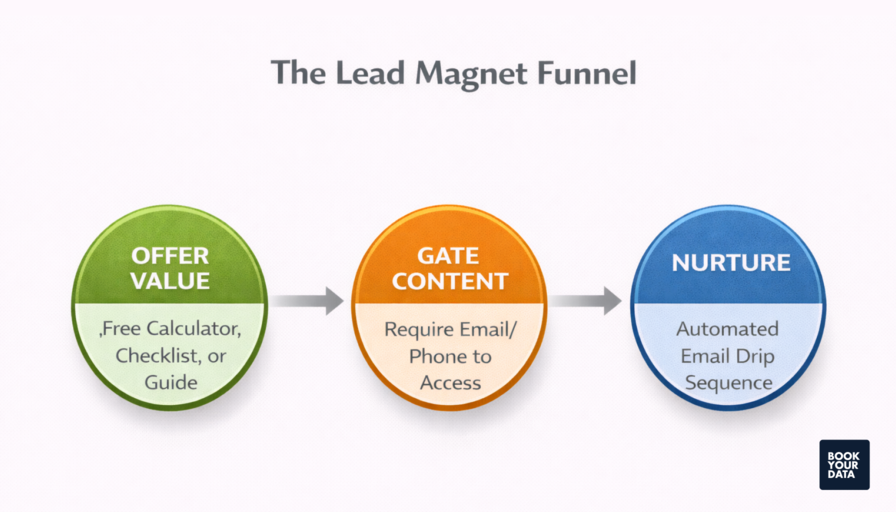
Lead magnets are free resources that visitors download in exchange for their contact information. Insurance agencies create checklists, calculators, guides, and comparison tools to capture email addresses and phone numbers.
Insurance-specific lead magnets include life insurance needs calculators, home inventory worksheets, coverage comparison guides, and "Questions to Ask Your Agent" checklists. Each lead magnet focuses on a specific challenge and positions the agency as a helpful resource.
Gated content requires visitors to submit a form before accessing the resource, which includes their contact information. The form collects the visitor’s name, email, phone number, and insurance type of interest. This information feeds directly into the agency's CRM for follow-up.
Special offers like "Get a free quote in 2 minutes" or "Save $500 on your auto insurance" promote form submissions. These offers create urgency and give prospects a clear reason to provide their contact details.
5. Integrate AI chatbots and live chats
AI chatbots interact with website visitors 24/7 and qualify leads without human interference. Chatbots ask preset questions about insurance needs, coverage amounts, and contact preferences. The chatbot then routes qualified leads to agents or schedules callbacks. Agencies that offer 24/7 quoting through mobile or self-service portals experience higher engagement and retention rates.
Live chat connects website visitors with agents in real time during business hours. It converts leads better than static forms because agents can answer questions immediately and handle objections right away.
Insurance chatbots handle common questions like "What types of coverage do you offer?" and "How much does car insurance cost?" The chatbot collects basic information and transfers complex inquiries to human agents. This hybrid approach increases lead capture while reducing agent workload.
6. Run email marketing campaigns
Email marketing helps insurance agencies nurture leads with automated sequences and personalized messages. Campaigns include welcome emails for new subscribers, quote follow-ups for prospects who did not convert, policy renewal reminders, and cross-sell promotions for additional coverage.
Personalized emails increase open rates and revenue per email compared to generic messages. Agents segment lists by coverage type, policy status, and engagement to offer relevant content. Abandoned quote emails remind prospects of incomplete applications and often include incentives to complete the process, which turns interest into actionable leads.
7. Use LinkedIn prospecting
LinkedIn prospecting targets business owners, HR managers, and executives who purchase commercial insurance policies. LinkedIn has 1 billion members, which include decision-makers at companies of all sizes.
LinkedIn Sales Navigator allows agents to filter prospects by job title, company size, industry, and location. Insurance agents search for titles like "Business Owner," "HR Director," "CFO," and "Operations Manager" in their target regions. LinkedIn ads work best for commercial insurance, group benefits, and executive life insurance products where decision-makers research options online.
B2B data platforms like BookYourData provide verified email addresses and direct dial phone numbers for LinkedIn prospects. Agents export prospect lists from LinkedIn, then use a LinkedIn email scraper to collect contact information and add it for multi-channel outreach campaigns. These multi-channel outreach campaigns combine InMail, email, and phone calls.
8. Manage lead nurturing funnels
Lead nurturing funnels guide prospects from initial awareness to policy purchase through automated steps. The funnel includes educational content, quote requests, agent consultations, and policy applications.
Top-of-funnel content attracts prospects researching insurance options through blog posts, social media content, and educational videos. This content focuses on common questions and establishes the agency's authority. Prospects who consume this content move to the middle of the funnel.
Middle-of-funnel activities include quote comparisons, coverage consultations, and personalized recommendations. Agents send drip email campaigns with case studies, testimonials, and product comparisons. Prospects at this stage are evaluating options and comparing agencies.
Bottom-of-funnel includes prospects who are ready to buy. The agent presents final quotes, answers remaining questions, and guides the prospect through the application process. Automated reminders follow up with prospects who pause at any stage of the funnel.
9. Perform social media marketing and social selling
Social media marketing builds brand awareness and generates insurance leads, which include marketing qualified leads, through organic posts and paid advertising. Facebook, Instagram, LinkedIn, and TikTok each reach different demographics with unique content formats.
Facebook reaches the largest audience for personal lines insurance, which includes auto, home, and life coverage. Insurance agents post educational content, client testimonials, and community involvement updates. Facebook Groups focused on local communities or specific niches provide opportunities for organic engagement.
Social selling involves building relationships with prospects through direct engagement rather than advertising. Agents comment on posts, share relevant articles, and participate in industry discussions. This approach establishes credibility before any sales conversation begins.
Video content performs well across all social platforms. Short videos explaining insurance concepts, answering FAQs, or sharing client success stories generate higher engagement than text posts. Agents repurpose video content across multiple platforms to increase audience reach.
10. Build partnerships, affiliates, and referral networks
Partnership marketing connects insurance agents with related businesses that include the same target audience. Real estate agents, mortgage brokers, car dealerships, and financial advisors regularly interact with consumers who need insurance.
Referral programs incentivize existing clients to recommend the agency to friends and family. Common incentives include gift cards, discounts on premiums, or charitable donations in the client's name. Referral leads have higher conversion rates because they come with built-in trust.
Affiliate partnerships involve paying a commission to businesses that send qualified leads. CPAs (Certified Public Accountants) and accounting firms, commercial real estate agents, and business consultants make strong affiliate partners for commercial insurance. Each partner receives a percentage of the first-year premium or a flat fee per closed policy.
Professional networking groups like BNI (Business Network International) and local Chamber of Commerce chapters provide structured referral opportunities. Members meet weekly or monthly to exchange leads and support each other's businesses.
11. Host events, seminars, and workshops
Educational events position insurance agents as local experts and generate qualified leads. Seminars on topics like "Understanding Medicare Options" or "Protecting Your Small Business" attract attendees actively researching coverage.
Webinars reach prospects who are unable to attend in-person events. Virtual seminars require registration, capturing attendee contact information for follow-up. Recording webinars creates on-demand content that continues generating leads after the live event.
Workshop formats include lunch-and-learn sessions for businesses, community education classes, and industry-specific training. Event follow-up is important for converting attendees into clients, so send a thank-you email within 24 hours. Event follow-up also includes sharing presentation slides or resources, and scheduling one-on-one consultations with interested attendees. Track which events generate the most qualified leads and focus future efforts on similar topics.
12. Launch direct mail and print campaigns
Direct mail reaches homeowners and business owners who sometimes do not respond to digital advertising. Postcards, letters, and brochures arrive in physical mailboxes and get noticed compared to crowded email inboxes.
Insurance direct mail campaigns target specific demographics like new homeowners, recent car buyers, or businesses in particular industries. Mailing lists segment recipients by age, income, home value, and other criteria relevant to insurance purchasing.
QR codes on direct mail pieces connect offline and online lead generation. Recipients scan the code with their smartphone and land on a personalized landing page for quote requests. This approach tracks response rates and connects direct mail to digital follow-up campaigns.
Print advertising in local newspapers, community magazines, and industry publications reaches audiences that consume traditional media. Sponsoring local sports teams, community events, and charity publications builds brand recognition within the agency's region.
13. Conduct cold calling and telemarketing
Cold calling and telemarketing connect insurance agents directly with potential clients by phone. Agents reach prospects who sometimes do not respond to digital advertising or email campaigns. Calls introduce coverage options, answer questions, and schedule consultations by using accurate contact lists and targeted scripts.
Phone conversations often convert at higher rates than web leads because agents engage prospects in real time, clarify issues immediately, and guide them through quote or policy applications. Follow-up calls can nurture warm leads and turn initial interest into confirmed policies.
B2B contact databases like BookYourData provide direct dial phone numbers for decision-makers. Agents filter by job title, company size, and industry to build targeted calling lists. BookYourData’s 97% accurate data saves time by avoiding wrong numbers and contacts.
14. Design local advertising and offline media
Local advertising and offline media help insurance agents reach prospects in their community who sometimes do not respond to online campaigns. Strategies include print advertisements in newspapers and magazines, radio spots, local TV commercials, billboards, and sponsorships of community events.
These channels build brand awareness, show coverage options, and drive potential clients to request quotes or contact the agency. Agents connect with highly relevant leads and increase the possibility of conversions by targeting specific neighborhoods or business areas.
15. Provide educational content
Educational content attracts prospects researching insurance options before they contact an agent. Blog posts, videos, podcasts, and guides answer common questions and establish the agency as a trusted resource.
Content topics focus on each stage of the buyer journey, such as the awareness stage, the consideration stage, and the decision stage. Video content performs well for insurance education because it allows agents to explain complex concepts visually. YouTube videos rank in search results alongside blog posts, expanding the agency's organic reach. Short-form videos on TikTok and Instagram reels reach younger audiences researching insurance for the first time.
Podcasts build long-form relationships with listeners over time. An insurance podcast covering industry news, expert interviews, and listener questions positions the host as an authority. Podcast listeners become warm leads when they eventually need coverage.
16. Include a CTA on every landing page
Every landing page needs to feature a clear, visible CTA button that directs visitors to request a quote, book a call, or access a resource. Strong insurance CTAs include “Get My Free Quote,” “Compare Rates Now,” and “Schedule a Consultation.” The CTA button should use contrasting colors that are unique from the page background.
Place the CTA above the fold and repeat it at the bottom for readers who scroll. Adding a few CTAs on longer pages increases the chances of capturing leads. Forms should collect only important information, like name, email, phone, and insurance type. Short forms with 3 to 4 fields have higher completion rates than long questionnaires.
What are insurance leads?
Insurance leads are contact details of prospects who show interest in an insurance product or purchasing insurance coverage. The contact details of prospects include names, phone numbers, and email addresses. High-quality insurance leads include additional information like coverage type, current carrier, policy expiration date, and budget range.
What are the types of insurance for lead generation?
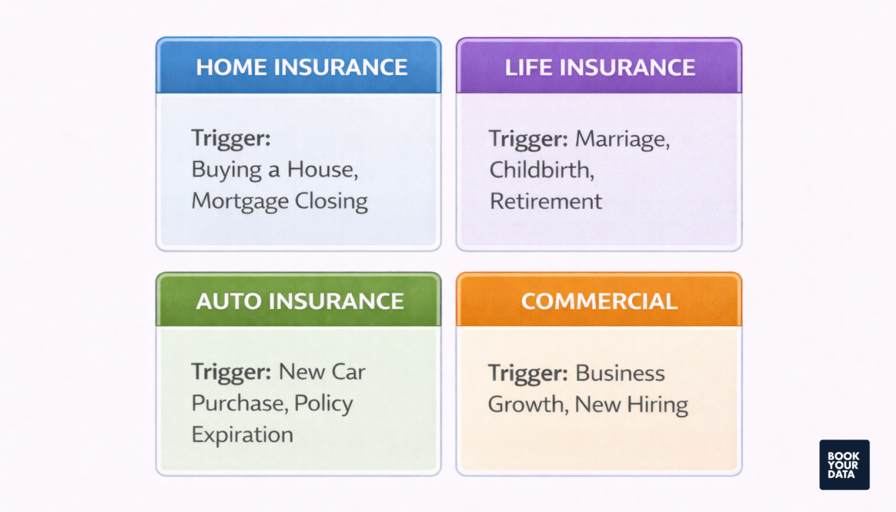
The types of insurance for lead generation are home insurance lead generation, life insurance lead generation, health insurance lead generation, auto insurance lead generation, and commercial insurance lead generation.
The types of insurance for lead generation are given in the table below.
Understanding the types of insurance leads helps to generate targeted leads and get more clients for insurance agents.
What are the future trends for insurance lead generation?
The future trends for insurance lead generation are AI-powered automation, hyper-personalization, and omnichannel engagement.
Artificial intelligence automates lead qualification, follow-up sequences, and personalized recommendations. AI chatbots handle initial prospect conversations and schedule appointments with human agents.
Embedded insurance integrates coverage options directly into related purchases. Buying a car includes auto insurance quotes, and purchasing a home presents homeowners' coverage options. This “just-in-time” approach generates more qualified leads because buyers are already in an active stage of making important purchase decisions.
Omnichannel nurturing uses email, SMS, social media, calls, and mail together so prospects get consistent messaging across all channels.
What are the top tools for insurance lead generation?
The top tools for insurance lead generation are CRM platforms, like Salesforce and HubSpot, email marketing, and B2B data providers, like BookYourData and ZoomInfo. Insurance lead generation tools also include appointment scheduling software, automation software, and a social media scheduling tool.

What are the most effective digital marketing strategies for insurance leads?
The most effective digital marketing strategies for insurance leads are email marketing, referral programs, content marketing, SEO, and paid advertising.
What are the most effective channels for insurance lead generation?
The most effective channels for insurance lead generation are email marketing, outbound calling or telemarketing, SEO, affiliate programs, and PPC (pay-per-click) advertising.
How can insurance agents improve lead quality?
Insurance agents can improve lead quality by targeting specific demographics, using verified contact data, and qualifying leads before sales conversations. Targeted marketing reaches high-quality lead prospects most likely to need and afford coverage.
Is lead generation important for technology companies too?
Yes, lead generation is important for technology companies too, as it helps them attract qualified prospects, fill a complex sales pipeline, build brand authority, and maintain consistent, scalable growth. Lead generation for technology companies uses content marketing, trade show attendance, webinars, and targeted advertising to reach industry decision-makers.
Are inbound leads better than cold calls?
Yes, inbound leads are better than cold calls because they convert at higher rates and come from prospects who contact you after already showing interest. Cold calling reaches more people, but conversion rates are lower since most recipients are not actively looking to buy.
How can social media help in generating insurance leads?
Social media helps generate insurance leads by building trust through educational content (blogs, infographics, videos) and real-time engagement, using chatbots for instant qualification, and running targeted ads to reach specific audiences. B2B social media trends include AI-powered personalization, short-form video (Reels, Stories), and employee advocacy.
What role does email marketing play in generating insurance leads?
Email marketing plays an important role in generating insurance leads by nurturing prospects through automated sequences and maintaining relationships with existing clients. Campaigns mostly include welcome emails, quote follow-ups, renewal reminders, and cross-sell offers. Segmented emails, a common strategy in email marketing for small businesses, offer relevant content based on coverage type, policy status, and past engagement.
How can SEO help generate more insurance leads?
SEO can help generate more insurance leads by improving your website’s visibility for relevant search terms, creating high‑quality SEO leads from people actively researching policies. It builds trust and authority, is cost‑effective long-term, and targets both local and niche customer searches.
Is there a way to get qualified insurance leads?
Yes, there is a way to get qualified insurance leads by targeting specific demographics, using qualifying questions on forms, and purchasing from reputable lead providers. Qualification questions help identify prospects who have active insurance needs, budgets, and the authority to make decisions.
What is the difference between cold and warm insurance leads?
The difference between cold and warm insurance leads is that cold leads are prospects who haven’t shown any interest or engagement with your brand, while warm leads have already interacted, such as by requesting a quote or showing intent. Using demand and lead generation strategies helps convert these warm prospects more effectively.
[CTA1]
.png)


