18 Best Strategies to Generate High-Quality Insurance Leads [2026]
Insurance businesses grow by consistently finding and connecting with people who need coverage for their homes, vehicles, health, or lives. Generating high-quality insurance leads involves identifying potential customers and capturing their interest, which is the basis of sustainable growth in the competitive insurance industry.
The ability to attract individuals at the right time when they are comparing options or experiencing life changes that require new coverage determines the success and failure of an insurance business. Effective prospecting strategies help agents focus efforts on people genuinely interested in purchasing policies rather than wasting time on unqualified contacts.
Insurance professionals can forecast sales, plan growth, and maintain long-term business stability by building a reliable pipeline of potential policyholders and serving customers who actually need their protection services
The strategies to generate high-quality insurance leads are mentioned below.
- Run targeted PPC and digital marketing campaigns: Pay-per-click advertising on search engines and social platforms targets specific demographics, locations, and keywords. Digital campaigns reach people actively searching for insurance coverage to deliver immediate visibility and measurable results while controlling advertising budgets.
- Capture leads from directories and listing platforms: Insurance directories and comparison websites attract consumers actively shopping for policies. Listing agencies on platforms like Yelp, Google Business Profile, and specialized insurance marketplaces increases visibility, generates inbound inquiries, and captures prospects already interested in purchasing coverage.
- Build strategic partnerships: Collaborating with real estate agents, mortgage brokers, auto dealers, and financial advisors creates referral networks. These professionals encounter clients who need insurance regularly, which makes partnerships mutually beneficial. Strategic alliances expand reach without significant marketing costs while delivering prequalified, warm leads.
- Use social media to attract and engage potential buyers: Social media platforms allow insurance agents to share educational content, engage with communities, and build relationships. Regular posts addressing common insurance questions, client testimonials, and helpful tips establish credibility while attracting prospects organically through shares and interactions.
- Prospect for high-value leads on LinkedIn: LinkedIn provides direct access to professionals, business owners, and decision-makers needing commercial or high-value personal insurance. Advanced search filters identify ideal prospects by industry, job title, and company size, and allow personalized outreach to qualified leads.
- Participate in community and offline networking opportunities: Attending local business events, chamber of commerce meetings, and community gatherings builds personal connections and establishes a local reputation. Face-to-face interactions create trust faster than digital methods, generate referrals and recommendations from established community relationships.
- Offer a free life insurance consultation: Free consultations remove barriers to initial engagement, allowing agents to demonstrate expertise and build rapport. Prospects appreciate personalized advice without commitment, which makes them more receptive to policy recommendations.
- Partner with trusted lead generation companies: Specialized lead generation firms provide verified, high-quality prospects actively seeking insurance quotes. Partnering with reputable providers saves time prospecting, delivers consistent lead flow, and allows agents to focus on closing sales rather than searching for potential customers.
- Improve landing pages for better lead conversion: Optimized landing pages with clear headlines, compelling value propositions, simple forms, and strong calls-to-action increase conversion rates. Fast loading speeds, mobile responsiveness, and trust signals like testimonials convince visitors to submit contact information and request quotes.
- Offer high-value lead magnets: Free resources like insurance guides, coverage calculators, comparison checklists, or educational ebooks attract prospects in exchange for contact information. Lead magnets provide immediate value while capturing qualified leads interested in learning more about insurance options and making informed decisions.
- Add live chat or chatbots for real-time lead capture: Live chat features and AI-powered chatbots engage website visitors instantly, answer basic questions, and capture contact information around the clock. Immediate responses prevent prospects from leaving websites without engaging, improve lead capture rates, and customer experience.
- Use content marketing to build trust and authority: Publishing blog posts, articles, and educational content addressing insurance questions establishes expertise and improves search engine rankings. Valuable content attracts organic traffic, builds credibility, and nurtures prospects through the decision-making process by providing helpful information consistently.
- Create video content to educate and persuade: Video content explaining coverage types, claim processes, and policy benefits engages audiences than text alone. Educational videos build trust, simplify complex insurance concepts, and increase conversion rates while being easily shareable across social media platforms.
- Host webinars to capture warm leads: Webinars on insurance topics attract engaged audiences genuinely interested in learning about coverage options. Attendees provide contact information during registration, show higher intent and engagement. Follow-up after webinars converts educated prospects into clients more effectively.
- Use CRM tools for organization and follow-up: Customer relationship management systems organize contact information, track interactions, automate follow-up reminders, and manage sales pipelines efficiently. CRM tools prevent leads from being forgotten, ensure timely communication, and provide analytics that improve conversion strategies and agent productivity.
- Segment and personalize email follow-ups: Dividing leads into groups based on insurance needs, demographics, or behavior allows personalized email campaigns. Customized messages address specific concerns, and coverage types resonate better than generic communications.
- Encourage referrals and Word-of-Mouth marketing: Satisfied clients provide the most credible recommendations. Implementing referral programs with incentives motivates existing policyholders to recommend services to friends and family. Word-of-mouth referrals convert at higher rates because they come with built-in trust and social proof.
- Implement lead scoring to prioritize high-quality prospects: Lead scoring assigns numerical values to prospects based on demographics, behavior, and engagement level. This system helps agents prioritize follow-up efforts on leads most likely to convert, improve efficiency, and ensure high-potential prospects receive immediate attention before interest fades.
High-Quality Insurance Lead Strategies
The strategies to generate high-quality insurance lead strategies and their benefits are given in the table below.
1. Run targeted PPC and digital marketing campaigns
PPC (pay-per-click) is a digital advertising strategy where businesses pay a fee each time someone clicks their ad. Businesses bid on keywords and display ads on platforms like Google or Facebook to target specific audiences and drive traffic that converts into valuable leads. The core benefit is precision targeting, as PPC campaigns allow businesses to target specific keywords, demographics, locations, and interests to make sure their ads reach the right audience who are actively searching for products or services related to their business.
Organic SEO takes months, but PPC ads provide immediate visibility on search engine results pages, which allows you to quickly generate qualified leads. An example includes a cleaning company that could bid on "commercial cleaning services near me" and appear instantly when prospects search that phrase. PPC platforms offer strong conversion tracking and analytics tools and allow businesses to measure KPIs such as impressions, clicks, conversions, and cost per conversion so they know exactly which ads generate real business.
2. Capture leads from directories and listing platforms
This lead capturing strategy requires placing your business on online directories and listing platforms where potential customers actively search for services, then optimizing those profiles to collect contact information. Web directories are beneficial, as businesses listed there are already segmented by niche, size, geographic location, and other parameters. Listing your business in niche-specific directories can put you in front of an audience that is actively searching for products like yours, which improves the quality of your leads.
Businesses tracking their listing performance see average conversion improvements of 34% within six months, according to the Jasmine Business Directory’s article titled “Turn Your Listings Into Leads.” Many directories provide websites, direct phone numbers, and local addresses, which businesses can use for cold-calling campaigns or direct outreach that turns passive listings into active lead generation tools.
3. Build strategic partnerships
Strategic partnerships are collaborative arrangements between non-competing businesses that serve similar audiences, which allow both parties to share resources and access each other's customer networks. Strategic partnerships can deliver access to new markets, customers, and audiences, and can improve a company's competitive positioning. They help a business achieve far greater reach than it could on its own.
Collaborate with other businesses, connect with new networks, reach new audiences, and generate leads that you might never have been able to access on your own. Suppose a fitness equipment company could partner with a nutrition brand to create a joint eBook or webinar to provide value to both audiences and generate leads for both companies. Partnerships also help save businesses money as they collaborate and share costs with others in your co-marketing initiatives, which makes them a highly cost-effective acquisition channel.
4. Use social media to attract and engage potential buyers
Social media lead generation is the process of identifying and nurturing potential buyers through platforms like LinkedIn, Facebook, Instagram, and TikTok. The strategy involves engaging buyers with relevant content, showing expertise, and building relationships throughout the sales cycle to generate leads online. Content marketing on social media includes informative posts and interactive content, builds credibility, and attracts potential leads.
Direct interaction with the audience strengthens relationships, builds trust, and guides leads through the sales funnel. Most consumers start researching products or services one to six months before they buy, which makes early engagement important. For example, “Dairy Farmers of Canada” used Instagram ads to promote a grocery gift card giveaway, which also captured leads by requiring users to subscribe to their newsletter for the chance to win. This approach puts businesses in front of high-intent audiences with timely, relevant content that moves them closer to purchase.
5. Prospect for high-value leads on LinkedIn
LinkedIn prospecting is the process of identifying and reaching out to decision-makers on the world's largest professional network platform to build relationships and convert connections into customers. Avoids mass, generic messaging and focus on building real relationships to convert new prospects into paying customers. 80% of B2B social media leads come from LinkedIn, according to the “LinkedIn prospecting” guide by HeyReach, which proves that it outperforms other platforms in terms of qualified lead generation. Genroe, in their article titled “LinkedIn B2B Lead Generation Best Practices and Case Study,” quote HubSpot’s reports that LinkedIn is 277% more effective at generating leads than Facebook and Twitter combined.
Tools like LinkedIn Sales Navigator allow sales teams to search with multiple filters like function, seniority level, years at company, and experience to rapidly sort through more than a billion members to reveal the best leads. A software company that targets marketing directors at SaaS companies can use Boolean search operators to find exact matches and send personalized connection requests. LinkedIn connects sales teams directly with decision-makers, which makes it a powerful tool for initiating outbound sales conversations.
6. Participate in community and offline networking opportunities
This strategy involves attending industry events, trade shows, local business gatherings, and community activities to generate leads through direct interactions rather than digital channels. Offline lead generation refers to the process of attracting and capturing potential customer interest through non-digital channels and focuses on building relationships and trust in face-to-face interactions, which leads to higher-quality leads. Meeting prospects in person at business gatherings, industry meetups, or chamber events allows businesses to build trust and qualify leads on the spot.
Community involvement puts a business directly in front of local prospects through real-world activities. Sponsoring events, volunteering, or supporting local initiatives builds trust and generates leads through personal engagement rather than digital interactions. A commercial cleaning company could sponsor a local business association luncheon, display promotional materials, and collect contact information from attendees. The personal connection built at networking events offers unique advantages that improve lead-generation efforts.
7. Offer a free life insurance consultation
This strategy involves providing complimentary consultation sessions where insurance agents meet with prospects to assess their needs to generate inbound leads, and recommend appropriate coverage without any obligation to purchase. The consultation creates opportunities for insurance businesses to show their expertise and build trust with potential clients. Facebook designed Lead Ads so that when someone clicks on an advertisement, a form appears pre-filled with their Facebook contact information, ready for submission for inquiring or booking a free consultation.
Agents can offer a free consultation or downloadable resources to capture and nurture leads apart from webinars or workshops. An agent could host a "Financial Planning for New Parents" workshop and collaborate with a local pediatrician or childcare center to reach the target audience, then follow up with attendees to a free consultation or additional resources. Email marketing can be used to offer incentives such as a free consultation to potential customers, with the composed email including important information about the services. This removes barriers to initial engagement and allows agents to give value. BookYourData provides verified email lists of more than 500 million profiles and contacts for prospecting outreach.
8. Partner with trusted lead generation companies
This strategy involves collaborating with specialized providers, like BookYourData, that provide pre-made contact lists for reaching prospects. It allows businesses to access qualified leads without managing the entire lead generation process internally. Lead generation platforms serve as an essential channel between companies and potential clients and focus on the attraction and conversion of prospects. These agencies support diverse strategies such as content marketing, telemarketing, PPC advertising, and email marketing to maintain a consistent flow of high-quality leads into the business's sales funnel.
Companies that collaborate with an agency dedicated to generating leads can get numerous advantages, like improved brand awareness, acquiring quality leads, and higher rates of conversion. Businesses can enter new markets and gain high-quality leads that could be difficult to reach independently by collaborating with companies that have access to a similar target audience, while also sharing marketing expenses and improving brand credibility through association. A B2B software company can collaborate with an agency that specializes in the technology sector outreach to access pre-qualified prospects actively seeking solutions.
9. Improve landing pages for better lead conversion
Landing page optimization is the process of systematically refining webpage elements to increase the percentage of visitors who complete desired actions like submitting contact information or making purchases. This subset of CRO (conversion rate optimization) involves A/B testing, which allows businesses to better understand which elements work with the target market. Businesses that implement these practices can increase conversion rates by up to 300%, according to Landingi’s article titled “25 Landing Page Best Practices That Convert in 2025.”
Effective landing pages strategically combine clean layouts, targeted content, strong CTAs, trust signals, and responsive design to guide visitors toward specific actions. Statistics show that addressing buyer concerns on landing pages increases conversions by up to 80%, while personalized CTAs convert up to 202% better, according to a news article titled “7 Ways to Optimize Your Landing Pages to Convert More Prospects Into Leads” by Golden Shovel Agency. Major improvements include simplifying forms, strengthening headlines, adding testimonials, and confirming mobile responsiveness to reduce friction and build trust.
10. Offer high-value lead magnets
A lead magnet is a valuable piece of content or resource offered for free in exchange for a visitor's contact information, especially their email address. Some of the most popular examples include ebooks, checklists, free trials, webinars, quizzes, and templates. The purpose is to offer something of value that directly addresses a pain point for the audience. High-value lead magnets should have a high perceived value and high actual value, be instantly accessible, and show expertise or a unique selling point.
Companies using relevant personalization generate 40% more revenue than those that do not, according to McKinsey and Company's research titled “The value of getting personalization right—or wrong—is multiplying.” The offer speaks directly to the right problem, people pay attention, and they are way more likely to convert. A professional career coach used a top ten list lead magnet that converted at a 32.4% rate and generated $27k in passive income, according to a success story published in Lead Pages’ article titled “15 Ways to Create a High-Value Lead Magnet.” The strategy works because it provides immediate value while capturing contact information for future nurturing.
11. Add live chat or chatbots for real-time lead capture
This real-time lead capture strategy involves implementing automated conversational tools on websites that engage visitors instantly, answer questions, and collect contact information through interactive dialogues available 24/7. Lead generation chatbots are automated tools designed to interact with website visitors in real time, gather contact information, and efficiently qualify leads. Businesses can simplify their lead generation and sales processes, improve user experience, and increase conversion rates with chatbots. Live chat helps to answer customer questions and removes buying objections, which results in a more confident consumer.
Conversational Design was able to increase conversion rates of chatbot leads to over 40% with their platform, compared to an average landing page conversion rate of 2.35%, according to the article titled “How to Build a Lead Generation Chatbot” by Landbot. Companies see an increase in the volume of leads through live chat solutions, as the technology captures leads at the peak of their interest while providing immediate assistance. This allows sales teams to quickly connect to prospects' needs and wants and generate high-quality leads.
12. Use content marketing to build trust and authority
Content marketing is a strategic approach to creating and distributing valuable, relevant content that highlights a business as an industry expert, addresses audience needs, and builds credibility over time rather than relying on direct sales pitches. Content marketing differs from traditional advertising that interrupts audiences, as it builds trust and authority over time. An industry report revealed that 71% of B2B buyers read blog content while making purchasing decisions, according to Reach First’s article titled “How Content Marketing Can Help You Build Trust And Authority,” which quoted Forbes.
Content marketing positions companies as industry authorities by providing real value to the audience. High-quality content that is accurate, informative, intentional, and relevant improves credibility and trustworthiness and leads to increased brand authority. For example, contractors can publish blog posts filled with insightful renovation advice and before-and-after pictures that transform casual readers into qualified leads by positioning themselves as trusted advisors. This strategy attracts leads already invested in the niche, which increases the chances of conversion.
13. Create video content to educate and persuade
Video content marketing means creating live or prerecorded videos that educate audiences about topics relevant to their needs while demonstrating how a product or service provides solutions, which persuades viewers to take action. Studies reveal that people retain 95% of a message when they watch it in a video compared to just 10% when reading it in text, according to the article titled “Utilizing Video Marketing for Lead Generation: Strategies for Success” by Lead Generation World.
Studies also show that video content allows businesses to educate, inform, and entertain audiences in a short time and makes them more likely to convert. Scoreapp’s article titled “5 Ways To Leverage Video for Better Lead Generation in 2025” quotes HubSpot’s marketing statistics report that around 83% of marketers use videos as part of their marketing strategy, which has helped increase their lead-generation activities. Businesses that create educational and informative videos and focus on topics relevant to the target audience and provide helpful information build more trust and authority. Videos also motivate viewers to contact businesses when they are ready to make a purchase.
14. Host webinars to capture warm leads
Webinars are interactive virtual events, such as presentations, panels, or workshops, that help to capture warm leads and allow businesses to educate target audiences on specific topics. Lead generation webinars capture their attention and encourage them to share their contact information, like their name and email address, in exchange for access to the webinar. 73% of B2B webinar attendees become qualified leads, and 15% of those who attend a webinar are likely to purchase the product or service, according to Eventbuilder’s blog titled “Webinars: The Ultimate Must-Have Lead Magnets.”
People who go through the trouble of registering and watching a webinar are seeking meaningful connections with a brand or in-depth information on a subject matter. Webinar attendees are more engaged and more ready to take action. Webinars also allow businesses to qualify leads by considering both the webinar's content type and registrants' behavior and conduct polls to gather information that helps to indicate lead quality.
15. Use CRM tools for organization and follow-up
CRM (Customer Relationship Management) tools are centralized software platforms that capture, organize, and track all lead interactions and contact information. It allows sales teams to automate follow-ups, prioritize prospects, and manage the entire customer journey. Businesses use lead management software and have all contact data in one place, so they can personalize prospect outreach without digging for details. Teams can easily access each lead's history, such as company information and a timeline of every touchpoint between the contact and the business.
Sales teams can use built-in AI and identify the best follow-up times and high-value leads, which result in improved repeat sales and a 15% increase in customer retention, according to the article titled “How AI CRM Platforms Are Revolutionizing Sales Strategies in 2025” by SuperAGI. CRM automation can handle things like sending follow-up emails, scheduling appointments, and assigning leads, all within one platform and automatically. Platforms also allow teams to set up automated email sequences triggered by specific lead actions and keep prospects engaged throughout the sales funnel without manual effort.
16. Segment and personalize email follow-ups
Email segmentation and personalization involve dividing email lists into specific groups based on characteristics like behavior, demographics, or interests, then customizing follow-up messages to match each segment's unique needs and preferences. This lead nurturing strategy moves beyond generic mass emails to deliver relevant content that resonates with individual recipients. Personalized emails show understanding of the recipient's specific situation, pain points, and stage in the buyer journey, which significantly increases open rates, click-through rates, and conversions.
The strategy is to use data collected through CRM systems and email marketing platforms to automatically trigger personalized messages based on specific actions or criteria to deliver timely and relevant communication.
17. Encourage referrals and Word-of-Mouth marketing
Referral marketing is a strategy where businesses motivate existing customers to recommend their products or services to friends, family, colleagues, and trusted personal relationships to generate high-quality leads. The satisfied customers share positive experiences, essentially pre-qualifying prospects, which makes referred leads likely to convert and become loyal customers themselves. Word-of-mouth marketing works because people trust recommendations from those they know better than traditional advertising.
Businesses can regulate this process by creating referral programs that offer rewards like discounts, gift cards, cash incentives, or benefits for both the referrer and the new customer. A subscription service could offer existing customers a free month for every successful referral, while the referred friend receives a discount on their first purchase. The strategy works best when the referral process is simple, rewards are meaningful, and the overall customer experience is good enough that customers naturally want to share it with others.
18. Implement lead scoring to prioritize high-quality prospects
Lead scoring is a methodology that assigns numerical values to leads based on their characteristics and behaviors and allows sales teams to rank prospects and focus on those likely to convert into customers. The scoring system considers both demographic information, such as job title, company size, and industry, and behavioral data like website visits, email opens, content downloads, and webinar attendance. Higher scores indicate stronger buying intent and a better fit with the ideal customer profile.
This prospecting strategy prevents sales teams from wasting time on unqualified leads while making sure hot prospects receive immediate attention. For example, a B2C software company can assign 10 points for visiting the pricing page, 20 points for requesting a demo, and 5 points for opening marketing emails, with leads scoring above 50 points automatically transferred to sales representatives for immediate follow-up. Modern CRM systems automate this process and continuously update scores as leads interact with the brand and trigger specific actions after reaching thresholds.
What is lead generation for insurance?
Lead generation for insurance is the process of identifying and attracting potential customers who may be interested in purchasing insurance policies. It involves collecting contact information from people who show interest in coverage, such as through online forms, phone calls, or other marketing channels. This process is important for insurance businesses because it creates a steady pipeline of potential clients to convert into policyholders.
Insurance companies struggle to grow their customer base and maintain revenue without consistent lead generation. Effective lead generation helps agents focus their efforts on prospects who are actively seeking coverage, making sales processes more efficient and cost-effective.
How does lead generation for insurance work?
Lead generation for insurance works by attracting potential customers through multiple marketing channels such as content marketing, social media engagement, search engine optimization, and paid advertising campaigns. Insurance businesses create valuable educational content, run targeted ads, and optimize websites to capture visitor interest. When prospects land on optimized pages, they fill out forms requesting quotes or information, which converts them into leads. CRM systems then organize contact information, track interactions, and automate follow-up sequences to nurture these leads through personalized email campaigns and timely communication. Many agencies partner with b2b lead generation companies that specialize in delivering verified prospects, while others use target lead generation strategies focusing on specific demographics and geographic locations. Landing pages with clear calls-to-action, lead magnets like free guides, and automated workflows ensure consistent engagement until prospects convert into policyholders.
What are the types of insurance leads?
The types of insurance leads include home insurance lead generation, commercial insurance lead generation, life insurance lead generation, social insurance leads, health insurance leads, and auto insurance leads.
The types of insurance leads are given below.
- Home insurance lead generation: Home insurance leads are potential customers who have expressed interest in purchasing or upgrading homeowners' insurance policies to protect their property against damage, theft, and financial losses from various threats.
- Commercial insurance lead generation: Commercial insurance leads are businesses or organizations that seek insurance quotes or express interest in coverage to protect their companies from risks such as property damage, liability issues, and employee issues.
- Life Insurance lead generation: Life insurance leads are individuals who express a desire for life insurance contracts, where they pay premiums in exchange for financial benefits issued to beneficiaries upon death or after a set period.
- Social insurance leads: Social insurance leads are all residents of a state who need mandatory government-provided protection against economic risks like unemployment, sickness, or old age, typically deducted from payroll by employers.
- Health insurance leads: Health insurance leads are individuals or businesses that have expressed interest in obtaining health insurance quotes, comparing available plans, or purchasing policies to cover medical expenses and healthcare needs.
- Auto insurance leads: Auto insurance leads are potential clients who have shown interest in car insurance products by providing contact information, and get quotes to protect themselves from financial losses due to accidents or theft.
What are the pros and cons of purchasing insurance leads?
The pros and cons of purchasing insurance leads are mentioned to help businesses understand in a table given below.
Which are the best tools to generate high-quality insurance leads for your business?
The best tools to generate high-quality insurance leads for your business are BookYourData, UpLead, ZoomInfo, Hunter.io, and Leadfeeder.
BookYourData
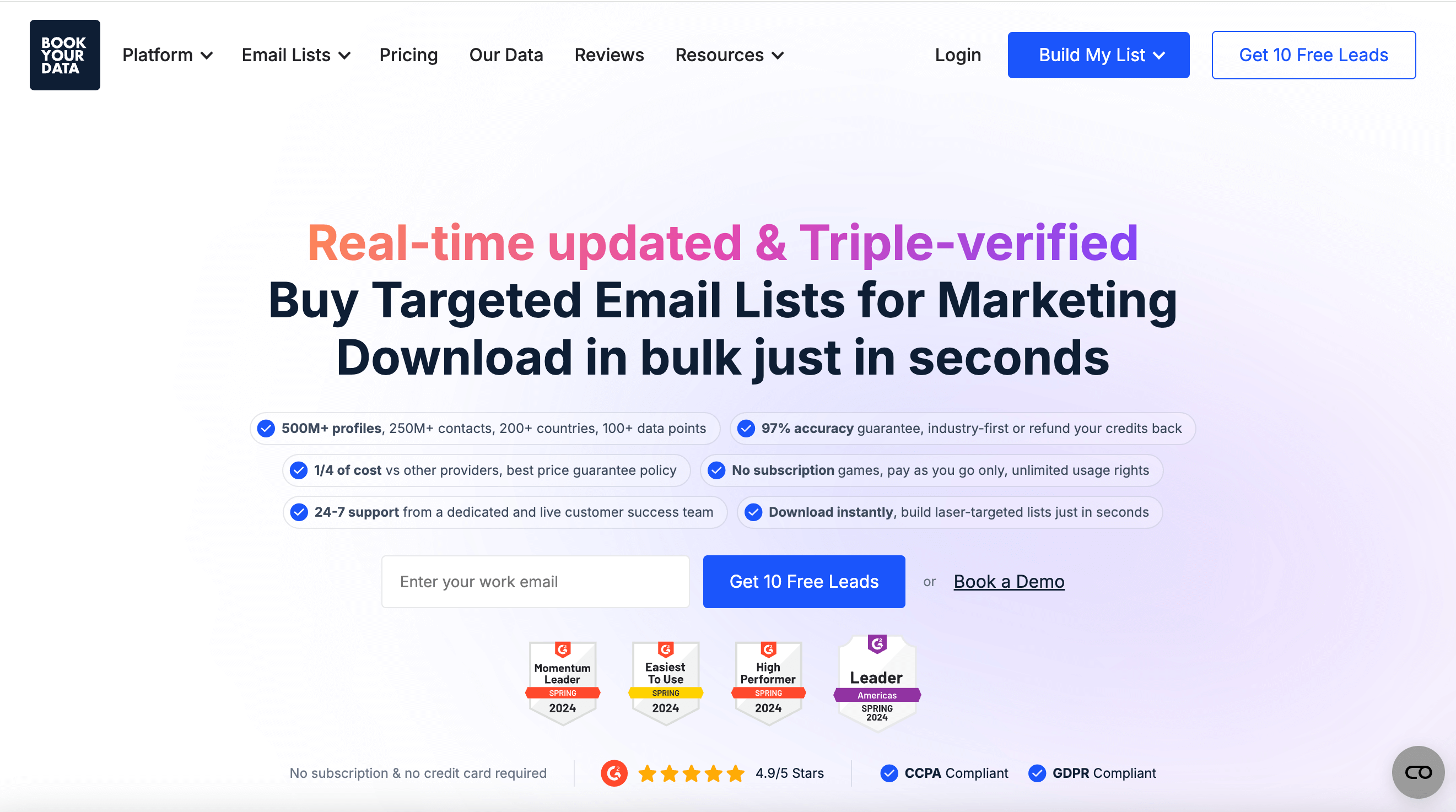
Best For: Insurance agents, teams, and agencies that need verified email lists with guaranteed data accuracy.
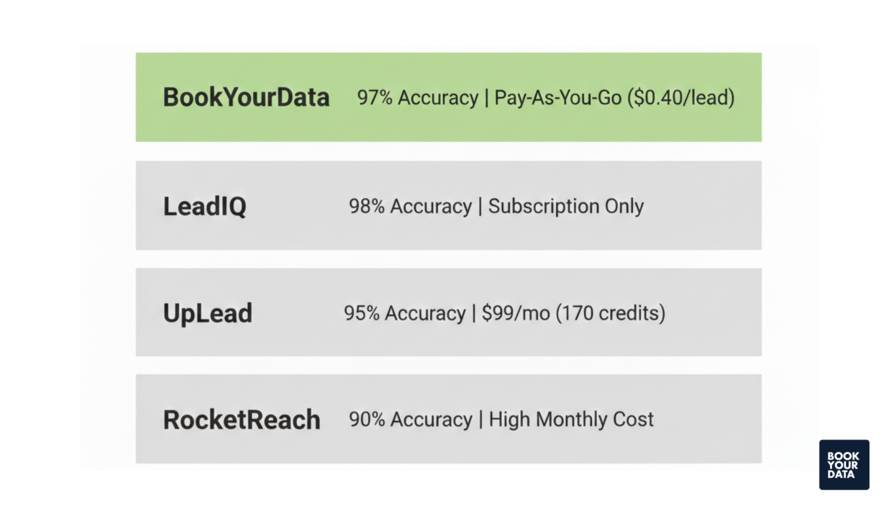
BookYourData stands out as the premier choice for insurance agents to buy email lists, as it offers the best lead lists with a 97% data accuracy guarantee and access to over 250 million verified B2B contacts. BookYourData delivers real-time email verification and pay-as-you-go pricing to make sure agencies only pay for deliverable leads.
UpLead

Best For: Insurance businesses that need contact data for email outreach and ad targeting.
UpLead guarantees best-in-class 95% data accuracy with a strong, careful process for insurance leads, which allows higher email outreach accuracy and precise ad targeting for growing insurance businesses efficiently.
ZoomInfo

Best For: Large insurance agencies that need extensive company intelligence and buyer intent data.
ZoomInfo offers an extensive database covering approximately 34 million companies and 321 million profiles with detailed contact information, employee count, revenue data, and real-time purchase intent signals for insurance prospecting.
Hunter.io

Best For: Insurance agents who need to find and verify professional email addresses.
Hunter.io locates and verifies professional email addresses with verification confidence scores, and allows insurance agents to build clean contact lists while protecting sender reputation through accurate email validation.
Leadfeeder
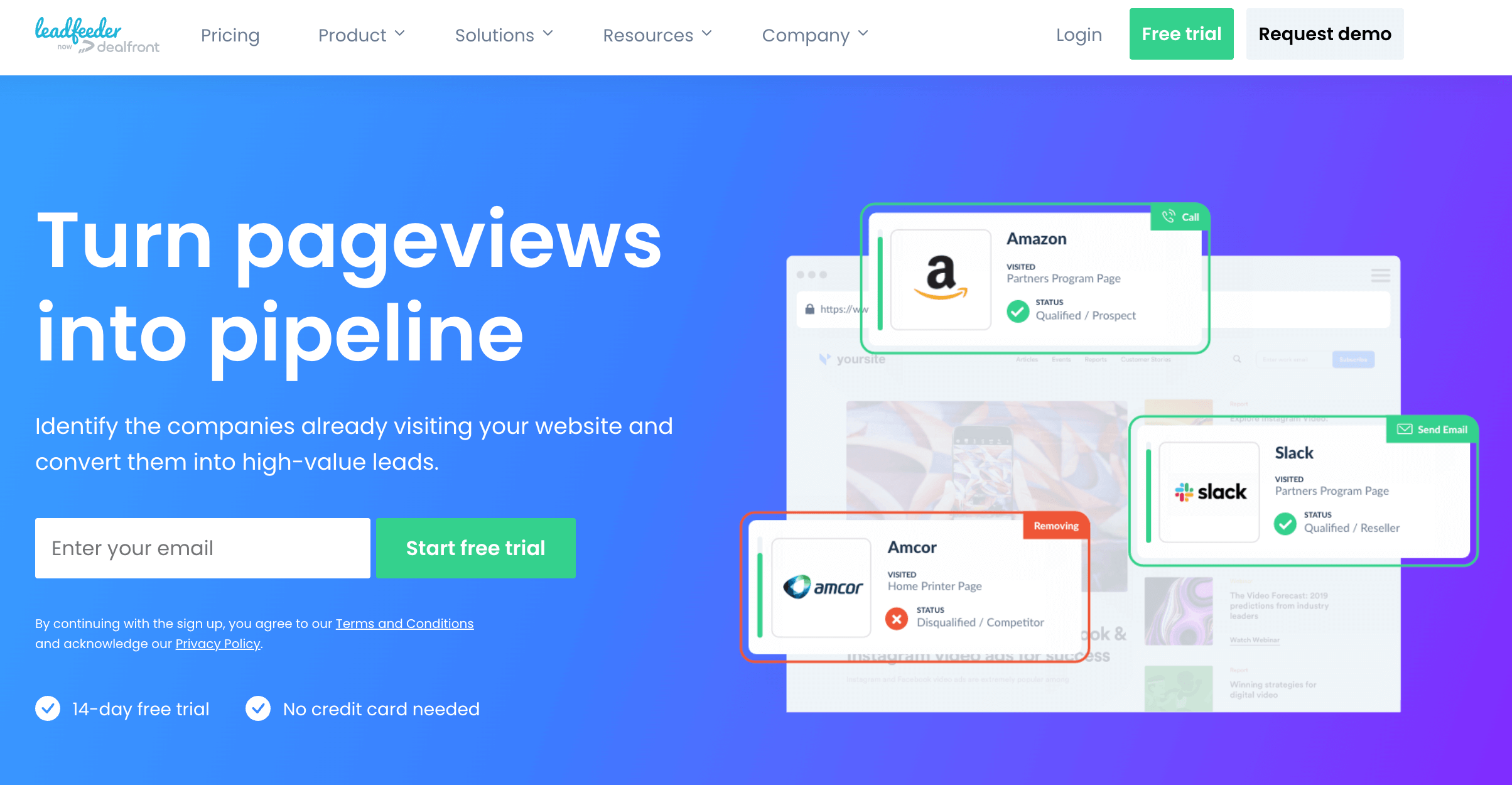
Best For: Insurance teams that want to identify anonymous website visitors before they fill out forms.
Leadfeeder identifies unknown company website visitors and enriches them with company data, visitor behavior, and contact details, which helps insurance teams find high-intent leads before they complete forms.
It is essential to understand the importance and reliability of lead generation tools and get the best lead lists to generate high-quality insurance leads for your business.
How can AI help generate high-quality insurance leads?
AI helps generate high-quality insurance leads by analyzing customer data patterns to identify potential buyers with higher conversion rates. It automates lead scoring, predicts customer behavior, personalizes outreach messages, and filters out unqualified prospects. AI-powered chatbots engage website visitors instantly, while machine learning algorithms optimize targeting strategies and improve lead quality over time through continuous data analysis.
What lead generation tools help generate high-quality insurance leads?

The lead generation tools that help generate high-quality insurance leads include email finder tools for discovering verified addresses like BookYourData, data enrichment software for detailed prospect information, website visitor tracking systems, CRM platforms for managing contacts, and AI-powered chatbots for instant engagement. Marketing automation platforms simplify outreach campaigns, while lead scoring tools prioritize prospects based on conversion likelihood and behavior patterns.
What are the essential strategies to attract and convert insurance leads?
The essential strategies to attract and convert insurance leads include creating valuable educational content, such as a lead generation guide that addresses customer pain points, and optimizing websites for search engines. Other strategies include the use of social media engagement, to implement targeted email campaigns, and build referral programs. It also includes quick follow-up responses, personalized communication, transparent pricing information, and establishing trust through testimonials, which improve conversion rates.
Why should insurance agents follow lead generation statistics and trends?
Insurance agents should follow lead generation statistics and trends to understand market shifts, identify effective channels, and optimize marketing budgets. Other reasons include tracking conversion rates, cost per lead, and customer behavior patterns, which help agents make data-driven decisions, stay competitive, and adapt strategies quickly.
What makes an insurance lead high-quality?
An insurance lead becomes high-quality by containing accurate contact information, a genuine interest in purchasing coverage, and matching the target demographic profile. The prospect has the financial capability to afford premiums, shows a clear intent to buy, and provides verified personal details.
What role does CRM play in insurance lead generation?
The role CRM plays in insurance lead generation is by centralizing contact information, tracking all interactions, and automating follow-up sequences. It segments leads based on behavior and demographics, manages sales pipelines efficiently, and prevents prospects from being ignored.
How does lead generation for attorneys work?
Lead generation for attorneys works through targeted digital marketing strategies such as search engine optimization for legal keywords, pay-per-click advertising, content marketing addressing legal questions, and online directories. Potential clients seeking legal services submit contact information through website forms, phone calls, or chat features.
What is the most effective way to generate leads for technology companies?
The most effective way to generate leads for technology companies involves creating technical content like whitepapers, case studies, and product demos that showcase expertise. Businesses can offer free trials, host webinars, and optimize for technical search terms to attract qualified prospects. LinkedIn outreach, account-based marketing, community engagement, and partner referrals work particularly well.
What role do marketing leads play in generating insurance leads?
Marketing leads play a major role in generating insurance leads by creating awareness through campaigns, attracting prospects via multiple channels, and qualifying potential customers based on interest level. Marketing efforts educate audiences about coverage options, build brand trust, and capture contact information through forms and calls-to-action.
[CTA1]