17 Effective Lead Generation Tips For Attorneys: 2026 Edition
Lead generation is the process of attracting potential clients and capturing their contact information so law firms can follow up and convert them into paying clients. It involves identifying prospects who need legal services and guiding them through the decision-making journey until they hire an attorney.
Lead generation is important for attorneys because it creates a reliable system for client acquisition rather than depending solely on unpredictable referrals. It maintains steady cash flow, builds competitive advantage in crowded markets, and contributes directly to the firm's financial health and business growth. Lead generation allows law firms to target specific practice areas, attract qualified prospects, and maintain a consistent pipeline of potential clients who seek legal assistance.
The effective lead generation tips for attorneys are mentioned below.
- Improve your law firm website for conversions: Design the website to turn visitors into clients by placing clear call-to-action buttons, easy contact forms, fast loading times, mobile-friendly layouts, and removing friction from the inquiry process.
- Invest in SEO: Optimize the website to rank higher in search engine results when potential clients search for legal help, and increase visibility through relevant keywords, quality content, and local search optimization.
- Utilize content marketing to build authority: Create helpful articles, videos, and guides that demonstrate legal knowledge and attract potential clients organically, and position the firm as a trusted resource before prospects make contact.
- Create practice area–specific pages: Develop dedicated website sections for each legal service offered to help potential clients find exactly what they need while signaling expertise to search engines for better rankings.
- Use PPC advertising to capture urgent leads: Pay for advertisements that appear at the top of search results and target people actively searching for legal help and ready to hire an attorney right away.
- Get listed on online legal directories: Register the firm on platforms like Avvo, FindLaw, and Justia, where potential clients actively search for attorneys, and increase online visibility and credibility through directory presence.
- Use PPL (Pay-Per-Lead) Services: Purchase leads from third-party companies that generate potential client inquiries, paying only for actual contact information from people needing legal help rather than for clicks or impressions.
- Encourage reviews and referrals: Ask satisfied clients to leave positive reviews online and recommend the firm to others, and build credibility through social proof that influences the hiring decisions of future prospects.
- Offer free or discounted initial consultations: Remove financial barriers that prevent potential clients from taking the first step, and allow attorneys to show expertise and build rapport before discussing payment.
- Use email marketing to nurture leads: Send regular, valuable messages to potential clients who have shown interest but not yet hired the firm, to remain in their minds until they are ready to act.
- Build a strong social media presence: Maintain active professional profiles on platforms where potential clients spend time, building brand awareness and establishing credibility through consistent posting and engagement.
- Create digital client intake forms: Use online questionnaires that collect essential case information from potential clients before or after initial contact, simplify the process, and ensure consistent information gathering.
- Utilize lead capture tools and CRM software: Implement website features to collect visitor contact information and software to organize and track all interactions, and prevent leads from slipping through the cracks.
- Target specific life events: Focus marketing efforts on people experiencing situations that commonly require legal assistance, such as marriage, divorce, home purchases, or business formation, and reach prospects with immediate needs.
- Host webinars and speaking events: Present educational sessions where attorneys share legal knowledge with audiences who may become future clients, and show expertise while providing genuine value to attendees.
- Retarget warm leads through advertisements: Show advertisements specifically to people who have already visited the firm's website, keep the firm visible during the decision-making process, and encourage return visits.
- Personalize your outreach and messaging: Customize communications to address the specific situation and concerns of each potential client rather than sending generic messages, and increase conversion rates.
Lead Generation tips for attorneys
The lead generation tips for attorneys are mentioned below, with their main goal and benefits.
1. Improve your law firm website for conversions
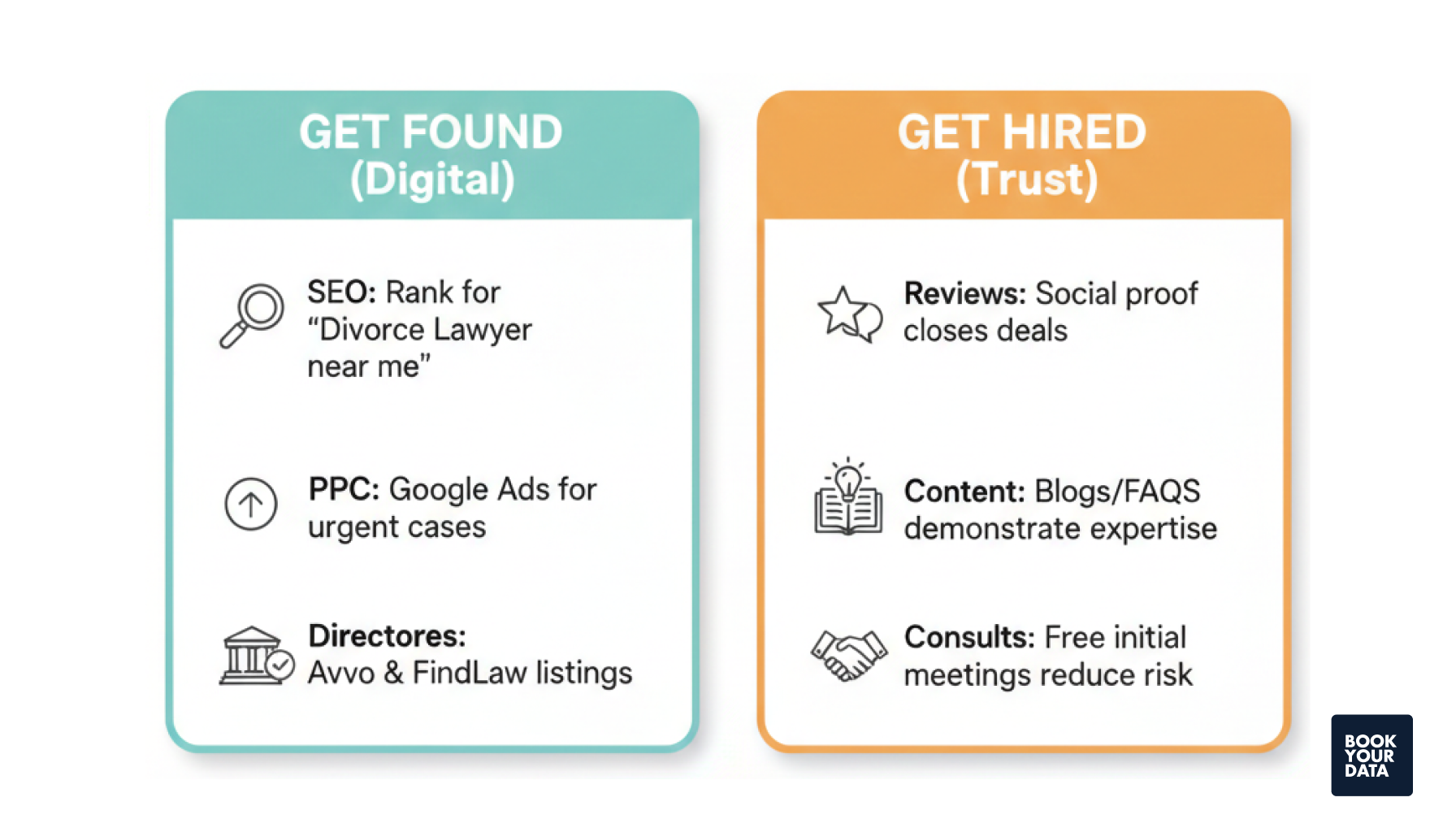
Website optimization means designing your site to turn visitors into actual clients who contact you. This involves placing clear call-to-action buttons, adding simple to find contact forms, and removing friction from the inquiry process. Think of your website as a 24/7 receptionist, and it should guide potential clients toward reaching out.
Practical improvements include adding clickable phone numbers for mobile users, placing contact forms on every page, and including client testimonials near your CTAs. Examples include a personal injury firm that might add a prominent "Free Case Evaluation" button at the top of each page with a simple three-field form. Fast load times and mobile-friendly design also matter because frustrated visitors leave before they ever see your contact information.
2. Invest in SEO
Search engine optimization means improving your website so it appears higher in Google results when people search for legal help. Most potential clients start their attorney search online, and they rarely scroll past the first few results. SEO includes researching what phrases your ideal clients actually type into Google, then creating pages that answer those specific questions.
You also need to build your site's authority through quality backlinks from other reputable websites. A family law attorney in Chicago would want to rank for searches like "Chicago divorce lawyer" or "child custody attorney near me." Local SEO is important, and creating your Google Business Profile, gathering client reviews, and verifying your firm's name, address, and phone number that appear consistently across directories all help firms to show up in local searches.
3. Utilize content marketing to build authority
Content marketing means creating helpful articles, videos, or guides that show your legal knowledge and attract potential clients organically. A firm must not only advertise its services but also answer the questions people are already asking. This strategy builds trust before someone even contacts you because they see you as a knowledgeable resource rather than just another advertisement. Good content also improves your SEO by giving Google more relevant pages to index and bring in inbound leads.
A criminal defense attorney can write blog posts explaining common charges, what to expect during the proceedings, or how bail works in their state. A prospect searches "what happens after a DUI (driving under the influence) arrest" and finds a detailed explanation that shows the firm as the obvious choice when they need representation. Consistency matters, but publishing regularly keeps a law firm’s site fresh and gives people reasons to return.
4. Create practice area–specific pages
Practice area pages are dedicated sections of your website that focus on one specific legal service you offer. Create separate pages for each type of case instead of adding all services onto a single page. This approach helps potential clients find exactly what they need and signals to Google that your firm has deep expertise in that area.
Each page should explain the legal issue, describe how a firm helps, and include a clear way to contact them. A personal injury firm can create individual pages for car accidents, slip and fall cases, medical malpractice, and wrongful death, each with unique content addressing the specific concerns clients have about that case type. This structure improves both user experience and search rankings because a firm targets precise keywords that people actually search.
5. Use PPC advertising to capture urgent leads
Pay-per-click advertising means paying to have the law firm appear at the top of Google search results, rather than waiting months for organic SEO to work. A firm only pays when someone actually clicks their ad, which makes it a direct investment in potential client contacts. PPC works especially well for legal services because people searching for attorneys often need help right away and will click the first relevant result they see.
Firms can target specific keywords, locations, and even times of day when their ideal clients are searching. A DUI (driving under the influence) attorney might run ads targeting "arrested for DUI last night" or "need DUI lawyer today" to reach people in urgent situations. Another option is to set a daily budget that prevents overspending, and tracking conversions shows exactly which ads generate phone calls and form submissions.
6. Get listed on online legal directories
Legal directories are websites that help people find attorneys, and getting the firm listed on them increases online visibility. These directories already rank well in Google for legal searches, so being listed puts your firm in front of potential clients who are actively looking for representation. Many directories also allow client reviews, which build credibility and influence hiring decisions.
Some listings are free, while premium placements cost money, so prioritize directories that appear in searches relevant to your practice areas. Popular options include Avvo, FindLaw, Justia, Lawyers.com, and Martindale-Hubbell. Firms must complete their profiles fully with photos, practice areas, and credentials because incomplete listings look unprofessional and get fewer clicks than detailed ones. The prospect searches "estate planning attorney near me," and directory listings appear prominently in results.
7. Use PPL (Pay-Per-Lead) services
Pay-per-lead services are third-party companies that generate potential client inquiries and sell them directly to law firms. PPL means paying only for actual contact information from people seeking legal help. These services handle the marketing work and deliver leads through phone calls, emails, or form submissions.
The cost per lead varies based on practice area and location, and personal injury leads cost more than simple traffic ticket inquiries. Companies like Martindale-Nolo, FindLaw, and Lawyers.com offer PPL programs for attorneys. The purpose is tracking which leads convert into paying clients to determine if the cost per lead delivers a positive return on investment over time. A family law firm can purchase leads for divorce consultations at a set price per inquiry. BookYourData offers customized contact lists for attorneys to expand your legal network.
8. Encourage reviews and referrals
Reviews and referrals represent word-of-mouth marketing in digital and traditional forms, where satisfied clients recommend the firm to others or share their positive experiences online. Client reviews on Google, Avvo, and Facebook influence hiring decisions because people trust opinions from others who faced similar legal situations. Referrals from past clients produce higher-quality leads since they come with built-in trust.
Law firms can promote this behavior by asking satisfied clients to leave reviews after successful case resolutions. A real estate attorney can send a follow-up email after closing by thanking the client and including direct links to review platforms. Some firms implement formal referral programs and offer small gifts or discounts on future services. The ethical rules in each state govern what incentives attorneys can offer, so checking local bar guidelines before launching any referral program is essential.
9. Offer free or discounted initial consultations
Free or discounted consultations remove the financial barrier that prevents potential clients from taking the first step toward hiring an attorney. Many people hesitate to contact lawyers because they fear expensive fees just for asking questions. A firm can offer a no-cost initial meeting to show expertise and build rapport before discussing payment. This strategy works well in competitive practice areas where multiple firms compete for the same clients.
A bankruptcy attorney advertising a "free 30-minute consultation" gives worried debtors a risk-free way to explore their options. The attorney assesses the case and explains the process during the consultation, which makes the potential client more comfortable moving forward. Attorneys invest time in consultations that never convert, but the strategy generates enough paying clients to justify the effort.
10. Use email marketing to nurture leads
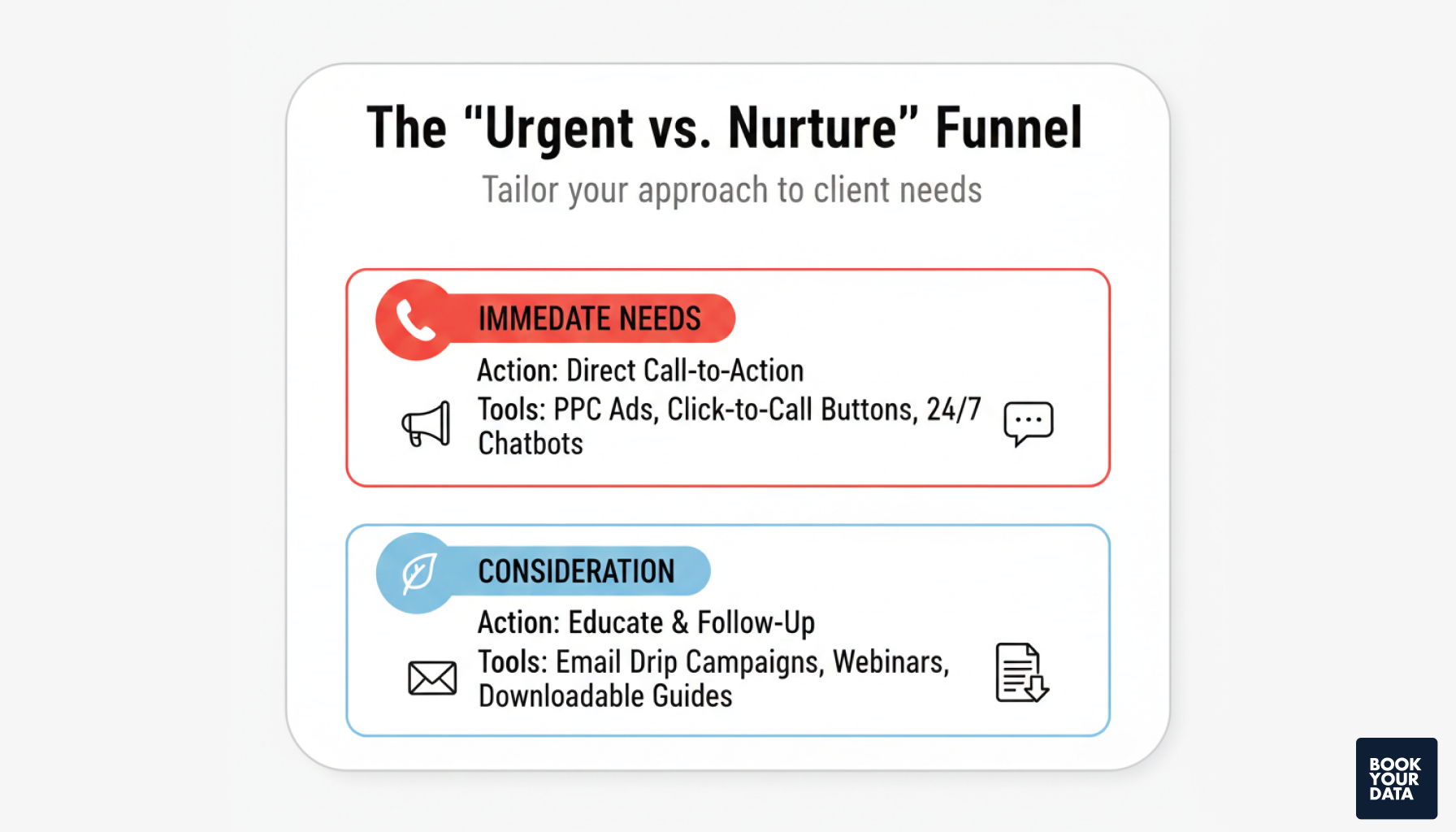
Email marketing involves sending regular, valuable messages to potential clients who have shown interest but have not yet hired the firm. Many people research attorneys for weeks or months before making a decision, and staying in touch helps them remember the firm when they are ready to act.
Nurturing leads through email means providing helpful information rather than constant sales pitches. A personal injury firm should collect email addresses through a free accident checklist download to send weekly tips about dealing with insurance companies and understanding claim timelines. Automated email sequences can deliver specific content based on the legal issue someone initially inquired about. This approach builds trust over time and positions the firm as a helpful resource. The recipient finally decides to hire an attorney, and the firm that provided ongoing value becomes the natural choice.
11. Build a strong social media presence
Social media presence means maintaining active, professional profiles on platforms where potential clients spend time online. The social media platforms rarely generate immediate client inquiries, but they build brand awareness and develop credibility over time. Consistent posting shows that the firm is active, engaged, and knowledgeable about current legal issues. Different platforms serve different purposes, such as LinkedIn, which works well for business law and professional networking, while Facebook reaches general consumers requiring family law or personal injury help.
An immigration attorney can share updates about visa policy changes on LinkedIn and answer common questions through short videos on Instagram. The content must educate and inform rather than advertise services. Interact with comments and messages, which shows responsiveness and approachability. Potential clients often check social media profiles to get a sense of firm culture and attorney personalities before making contact.
12. Create digital client intake forms
Digital client intake forms are online questionnaires that collect essential case information from potential clients before or immediately after initial contact. These forms replace paper documents and phone-based information gathering with a simplified electronic process. Potential clients can complete forms at their convenience and provide details about their situation, relevant dates, and contact preferences. This strategy saves staff time and guarantees consistent information collection across all inquiries.
A workers' compensation firm should use an intake form asking about injury type, employer information, and medical treatment received. The collected data helps attorneys prepare for consultations and quickly assess case viability. Modern intake softwares integrate with case management systems and automatically create new matter files from submitted forms. Firms that offer digital intake also signal that they use technology, value client convenience, and have qualities that appeal to people already used to handling other business matters online.
13. Utilize lead capture tools and CRM software
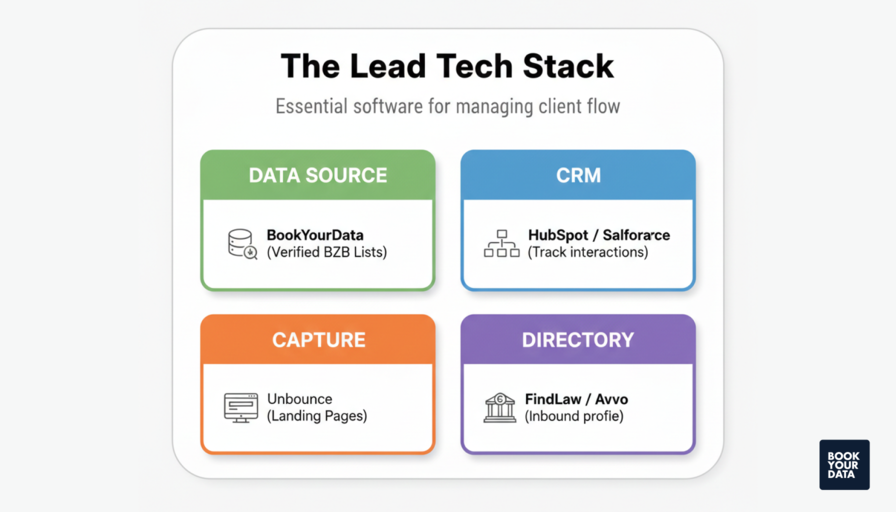
Lead capture tools are website features that collect contact information from visitors, while CRM (Customer Relationship Management) software organizes and tracks all interactions with potential and current clients. These technologies prevent leads from slipping through the cracks and help firms respond quickly to inquiries.
Lead capture tools include pop-up forms that offer free guides, live chat widgets, and exit-intent offers that appear when someone is about to leave the site. Leads flow into CRM software that tracks every touchpoint of captured leads, such as emails sent, calls made, consultations scheduled, and follow-ups needed. A criminal defense firm can use a chatbot to capture after-hours inquiries, with the CRM automatically assigning follow-up tasks to staff the next morning. Systems like Clio Grow, Lawmatics, and HubSpot help firms measure which marketing channels produce the best leads and identify challenges in the client acquisition process.
14. Target specific life events
Targeting life events means focusing your marketing efforts on people experiencing situations that require legal assistance. Firms identify moments when legal needs arise and position themselves to help during those times rather than advertising broadly. Major life events like marriage, divorce, home purchases, business formation, retirement, and the death of family members all trigger specific legal needs.
Advertising platforms like Facebook and Google allow targeting based on life event indicators such as recent engagements, new homeowners, or expecting parents. An estate planning attorney can target people who recently became parents with messaging about protecting their children's future through wills and trusts. A real estate attorney could reach people actively searching for homes in specific neighborhoods. This strategy produces higher-quality leads because the marketing reaches people with immediate, relevant needs rather than a general audience that may never require legal services.
15. Host webinars and speaking events
Webinars and speaking events are educational presentations where attorneys share legal knowledge with audiences who may become future clients. These events position the firm as an authority while providing genuine value to attendees. Webinars offer convenience since participants join online from anywhere, while in-person speaking engagements build stronger personal connections. Topics of the events should address common questions and concerns in the firm's practice areas.
A business law firm can host a webinar titled "Legal Essentials for Starting a Small Business" and attract entrepreneurs in the early planning stages. Attendees who find the presentation valuable reach out when they need paid legal assistance. Firms must record webinars to create content for repurposing and post on the website, share on social media, or offer as gated content that requires email registration. Local chambers of commerce, professional associations, and community organizations frequently seek speakers, which provides opportunities to reach targeted audiences without advertising costs.
16. Retarget warm leads through advertisements
Retargeting is a digital advertising strategy that shows advertisements specifically to people who have already visited the firm's website or interacted with its content. These visitors have shown interest by browsing practice area pages or reading blog posts, which makes them warmer prospects than cold audiences who have never encountered the firm. Retargeting works by placing a small tracking code on the website that identifies visitors and allows ads to follow them across Facebook, Instagram, Google, and other platforms.
A personal injury firm could show advertisements that feature client testimonials to someone who visited the car accident page but left without making contact. This repeated exposure keeps the firm visible during the decision-making process. Retargeting costs less than broad advertising because the audience is smaller and more qualified, and conversion rates tend to be higher since these individuals already know the firm exists.
17. Personalize your outreach and messaging
Personalized outreach means customizing communications to address the specific situation, concerns, and preferences of each potential client rather than sending generic messages. People respond better when they feel understood, and personalization shows that the firm pays attention to individual needs. This approach applies to emails, follow-up calls, consultation confirmations, and marketing materials. Instead of sending the same follow-up email to everyone, a family law firm should reference the specific issue mentioned during initial contact and custody concerns.
CRM software allows personalization at scale by storing details about each lead and automating customized messages based on practice area interest, referral source, or stage in the decision process. Even small touches matter, like using first names in emails or referencing the geographic area where someone lives. Personalized communication builds rapport early and increases the likelihood that prospects choose the firm over competitors who send impersonal, templated responses.
What is lead generation for attorneys?
Lead generation for attorneys is the process of attracting potential clients and capturing their contact information so the firm can follow up and convert them into paying clients. A lead is any person who has expressed interest in legal services and provided a way to reach them, and marketing qualified leads is important. Leads come from various sources depending on how the person first made contact with the firm.
Common types of law firm leads are mentioned below.
- Website contact: Someone submits a form on the firm's website requesting information or a consultation.
- Email response: A person replies to a marketing email or newsletter with questions about services.
- Phone lead: A potential client calls the office after seeing an advertisement or finding the firm online.
- Social lead: Someone sends a message through Facebook, LinkedIn, or another social platform expressing interest.
- Referral lead: A past client, colleague, or friend recommends someone who then contacts the firm.
Not all leads are equal in terms of readiness to hire. Law firms categorize leads into three groups mentioned below.
- Cold leads: People who fit the target profile but have shown minimal interest or engagement.
- Warm leads: Individuals who have interacted with the firm's content, attended a webinar, or made initial inquiries are referred to as warm leads.
- Hot leads: Prospects actively seeking legal help and ready to schedule consultations or hire an attorney immediately.
How does lead generation for attorneys work?
Lead generation for attorneys works by attracting prospective clients through various marketing channels, maximizes their interest over time, and ultimately converts them into paying clients. An important component of this process is utilizing the sales funnel, which maps the journey a potential client takes from first discovering the firm to actually hiring an attorney. Understanding each stage helps firms deliver the right message at the right time and move prospects closer to becoming clients.
The main stages of a sales funnel are mentioned below.
- Awareness: The potential client first learns the firm exists through advertising, search results, social media, or referrals.
- Interest: The person engages with the firm's content, visits the website, or requests more information about services.
- Decision: The prospect compares options, reads reviews, and evaluates whether the firm is the right fit for their legal needs.
- Action: The individual commits by scheduling a consultation, signing a retainer agreement, or hiring the firm to handle their case.
Why is lead generation important for attorneys?
Lead generation is important for attorneys because of a clear competitive advantage, predictable revenue streams, steady client flow, relevant leads, strong market positioning, and cost-effective growth.
The reasons behind lead generation are important for attorneys and are mentioned below.
- Clear competitive advantage: Strategic lead nurturing helps firms stand out in the highly competitive legal market and can also do lead generation from small businesses where thousands of attorneys compete for the same clients.
- Predictable revenue streams: A systematic lead generation approach creates reliable client acquisition pipelines and helps firms predict revenue and plan growth investments.
- Steady client flow: The right strategy and tactics help the legal lead generation produce a steady flow of quality, reliable leads that keep attorneys busy with billable work month after month.
- Relevant leads: Targeted lead generation strategies attract leads that are more likely to be interested in specific services, and improve the quality of incoming prospects by reducing time spent on unqualified inquiries.
- Strong market positioning: Lead generation with digital content marketing is an effective strategy for building brand and credibility that establishes a firm as a trusted authority in its practice areas.
- Cost-effective growth: The firms that use inbound marketing tactics allow the leads to do most of the work, and rather than chasing people down, reduce acquisition costs over time.
What makes lead generation for attorneys unique?
The things that make lead generation for attorneys unique are compliance with ethical standards, decisions based on trust, an extended sales or client acquisition cycle, and strict confidentiality obligations.
The reasons that make lead generation for attorneys unique are mentioned below.
- Compliance with ethical standards: Legal advertising is subject to strict ethical rules set by the American Bar Association and state bars, which restrict false or misleading claims and set boundaries on fee-sharing with non-lawyers.
- Decisions based on trust: Legal services involve high-stakes decisions requiring extensive trust-building through educational content and thought leadership before conversion. Potential clients need confidence in an attorney's abilities before sharing sensitive personal matters.
- Extended sales or client acquisition cycle: The journey from lead to client typically spans weeks or months, and requires sophisticated marketing campaigns to nurture prospects through multiple touchpoints.
- Strict confidentiality obligations: Lead capture forms and tracking must comply with attorney-client privilege standards, and lawyers have duties to maintain the confidentiality of prospective clients even before a formal relationship starts.
How to generate leads for your law firm?
To generate leads for your law firm, identify your ideal clients, have a fully operational website, high-quality website content, answer common legal questions, have a clear CTA (Call-To-Action), dedicate a landing page for lead capture, get listed in legal and local directories, use paid advertising, and follow up promptly with leads.
The steps to generate leads for your firm are listed in the table below.
How to choose the best lead generation methods for your law firm?
To choose the best lead generation methods for a law firm, consider budget, long-term goals, internal bandwidth, and ability to track results with a CRM. There is no single approach to law firm lead generation, so evaluating these factors before deciding which methods are best is essential.
Consider the budget available for lead generation efforts carefully. If the desired lead generation methods require more resources than initially planned, the firm must determine whether it is willing to make that investment.
Analyze the long-term goals the firm wants to achieve through lead generation. Some firms may want to improve their online reputation, while others may be more focused on increasing their client base by a certain date, so asking whether lead generation methods align with long-term goals is important.
Evaluate the internal bandwidth before launching any campaign. It is difficult to handle several clients from lead generation, so the firm must determine if it is prepared to take on a surge of new clients all at once.
Select methods that allow tracking results through a CRM system. Not every lead generation method will be effective for every attorney, so determining whether the existing CRM can help track the effectiveness of current campaigns is essential. Track KPIs like cost per lead, conversion rate to consult, and client acquisition cost using tools such as Google Analytics.
What are the best lead generation software for attorneys?

The best lead generation software for attorneys is BookYourData, FindLaw, HubSpot, Unbounce, and Salesforce. Each platform offers unique capabilities that help law firms attract, capture, and convert potential clients into paying customers through various marketing and data-driven approaches. Some focus on verified contact data, others on landing page creation, and others on client relationship management.
BookYourData
Best For: Attorneys and law firms that want verified contact lists for direct outreach campaigns.
About
BookYourData provides access to over 250 million verified B2B contacts with 97% data accuracy. The platform uses more than 100 filters, such as industry, company size, revenue, and location, to build targeted prospect lists.
BookYourData stands out as the premier solution for attorneys who want to expand their client base through targeted outreach. The platform offers attorney email lists that deliver pre-verified contact information about attorneys. Real-time updates and email verification guarantee reliable data for outreach, while the pay-as-you-go model means no subscriptions or contracts.
FindLaw
Best For: Attorneys who want directory visibility and full-service legal marketing support.
About
FindLaw is both a legal directory and a full-service digital marketing agency that pioneered online legal information and remains one of the most visible brands in the industry. It offers exclusive lead distribution, SEO services, and attorney directory listings to increase firm visibility. Law firms use it to increase online visibility and attract inbound leads from potential clients searching for legal help.
HubSpot
Best For: Law firms that need a low-cost CRM to manage client relationships.
About
HubSpot CRM provides tools for sales, marketing, customer support, and content management in one platform, which simplifies and improves client relationship management. The free version makes it accessible for solo practitioners and small firms. Attorneys use HubSpot to track leads, automate follow-up emails, and organize client communications. The platform integrates with most legal practice management software.
Unbounce
Best For: Law firms running Google Ads or social media advertising that need high-converting landing pages.
About
Unbounce helps law firms create landing pages optimized to convert visitors into leads. The platform reduces cost-per-click by using targeted landing pages and sign-up forms to schedule consultations and start the intake process. It turns expensive legal keyword traffic into actual client inquiries. Attorneys use Unbounce to build sign-up forms and intake pages without coding skills.
Salesforce
Best For: Large law firms that require enterprise-level CRM for scalability, advanced reporting features, and custom workflows.
About
Salesforce captures leads from multiple channels and automates follow-up sequences. The platform offers custom communication templates and ready-to-use marketing materials for attorneys to reach prospects faster. Salesforce provides extensive customization options and integrates with a wide range of third-party applications.
Which databases help with effective lead generation for attorneys?
The databases that help with effective lead generation for attorneys include BookYourData, which offers filtered data by industry, location, job title, and company size, and allows law firms to reach decision-makers directly. Other databases include Listkit.io and LinkedIn Sales Navigator, which help with lead generation for attorneys. Quality databases include real-time email verification and accurate business contact details to reduce wasted outreach efforts and improve conversion rates for legal marketing campaigns.
How does B2B lead generation help attorneys grow their client base?
The B2B lead generation helps attorneys grow their client base by connecting them directly with businesses and professionals who need legal services. It allows law firms to identify decision-makers, target specific industries, and reach qualified prospects through email campaigns and direct outreach. This systematic approach builds a steady pipeline of potential clients beyond traditional referrals and networking.
What are the suitable lead generation tools for attorneys?
The suitable lead generation tools for attorneys include CRM systems for tracking client interactions, landing page builders for capturing inquiries, email marketing platforms for nurturing prospects, and B2B contact databases like BookYourData for targeted outreach. Legal directories, paid advertising platforms, and marketing automation software also help law firms attract qualified leads and convert them into paying clients.
Can attorneys generate leads online?
Yes, attorneys can generate leads online through multiple digital channels such as LinkedIn, Facebook, and paid website advertisements. Law firms attract potential clients using search engine optimization, paid advertising, social media marketing, legal directories, and content marketing. Online lead capture forms, email campaigns, and B2B databases further help attorneys connect with prospects actively seeking legal services, making digital lead generation an essential strategy for modern law practices.
How much do lawyers usually pay for leads?
Lawyers usually pay for leads between $50 and $500 per lead, and it depends on practice area, location, and lead quality. High-value practice areas like personal injury and medical malpractice can cost $500 to $1,500 per lead due to competitive demand. Shared leads are cheaper than exclusive leads, while organic methods like SEO reduce long-term acquisition costs.
Demand Generation vs. Lead Generation: Which works better for attorneys?
Both demand and lead generation are strategies that work better for attorneys, demand generation builds awareness and establishes the firm as a trusted authority through educational content and thought leadership, and lead generation captures contact information from interested prospects ready to hire. Both approaches create long-term brand recognition while maintaining a steady flow of qualified potential clients for immediate conversion.
What are the best lead lists providers for attorneys to grow their practice?
The best lead list providers for attorneys to grow their practice are platforms like BookYourData, ZoomInfo, and LakeB2B, which provide targeted prospect lists filtered by industry, job title, and location. The best lead lists providers deliver real-time verified emails and direct contact details and help law firms reach decision-makers efficiently and expand their client base through targeted outreach campaigns.

Can attorneys find reliable sources for free legal leads?
Yes, attorneys can find reliable sources for free legal leads through various methods, such as claiming free profiles on legal directories like Avvo and Justia, optimizing Google Business Profile, engaging on social media platforms, and asking satisfied clients for referrals to generate leads without cost. Content marketing and answering questions online also attract potential clients organically without paid advertising.
How can attorneys use targeted lead generation strategies to improve conversion and ROI?
Attorneys can use targeted lead generation strategies to improve conversion and ROI by defining ideal client profiles, focusing marketing efforts on specific practice areas, and using data-driven targeting through paid advertising and B2B databases. Prompt follow-up with leads, personalized messaging, and tracking campaign performance through CRM systems help identify high-performing channels and eliminate wasted spending on unqualified prospects.
What are some lead sourcing tips for attorneys to find quality clients?
Some lead-sourcing tips for attorneys to find quality clients include the use of verified B2B databases with filtering options, build referral networks with other professionals, and optimize local SEO presence. Other options include responding quickly to inquiries, qualifying leads through intake forms, and nurturing prospects with valuable content to help attract clients who genuinely need legal services.
[CTA1]